Your Personal Economic Life Cycle
Every human being has an economic life cycle.
Most people have never thought about it in those terms before, but it is a reality that is worth understanding and exploring.
You arrive in this world with nothing. No money. No possessions. No investments. No pension. No property. Just a tiny human being with a body and a life ahead of you. However, even before you were born, money was already influencing your experience. Some children arrive in families with an abundance around them. Others arrive in families where every penny matters. Some inherit opportunities. Others inherit challenges. None of us gets to choose where we begin.
Then life starts.
Money begins to flow towards and away from us. Perhaps our parents spent money raising us. Perhaps we are gifted with trust funds or allowances. Perhaps we are never given a penny until we start earning it ourselves. Perhaps grandparents help. Perhaps governments contribute. Perhaps they don't.
As we grow older, we begin creating economic value ourselves.
We earn pocket money. We get our first job. We start a business. We buy things. We make mistakes. We earn more. We earn less. We lose money. We make money. We save some. We spend some. Sometimes we spend far too much.
And throughout all of this, money is simply moving.
That is all it is, really.
Movement.
A flow of resources between people. A token of exchange to facilitate timing differences of needs and wants.
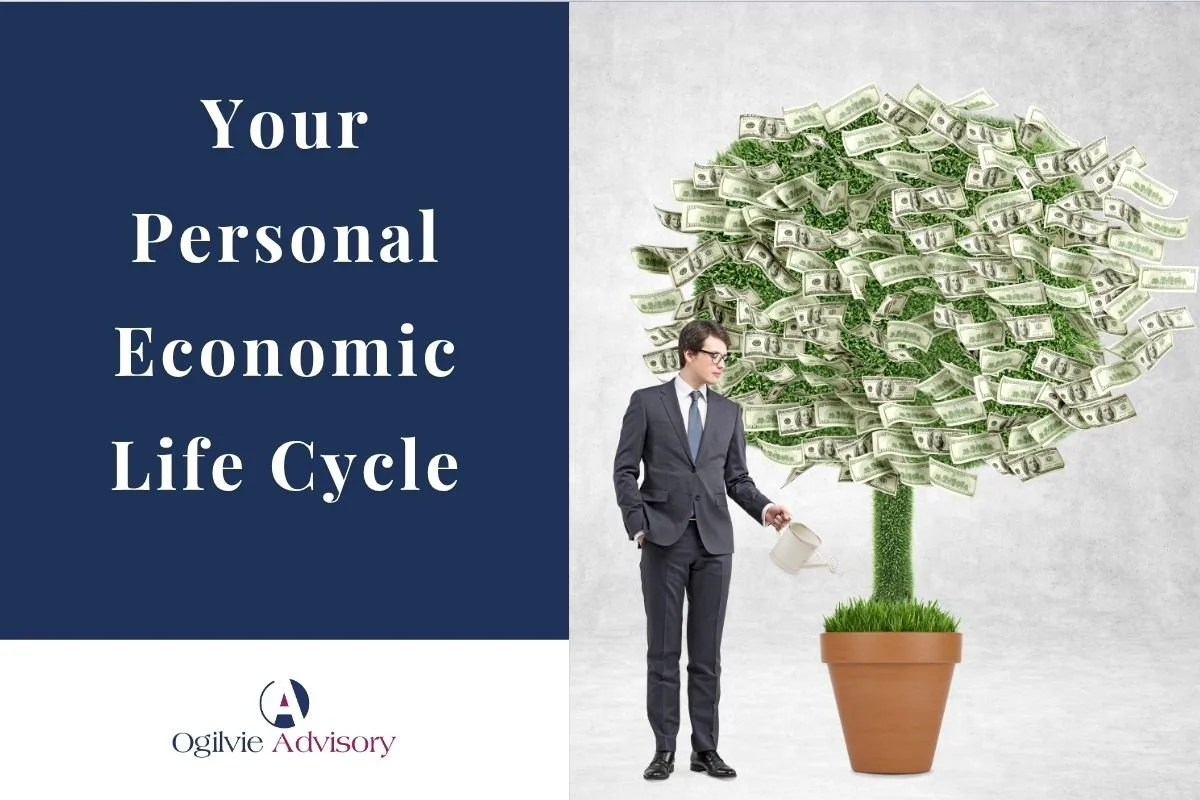
What is fascinating is how emotional people become about money, even though it is actually quite a strange invention. Money doesn't grow in nature. There is no money tree. There are no £20 notes wandering around the Scottish hills.
Human beings invented money because carrying sheep, sacks of grain and barrels of ale around to trade with one another became rather inconvenient.
Money became a shortcut. A token. A way of representing value. And somehow, over time, we forgot that. We started treating money as though it were the thing itself rather than the thing that helps us exchange value.
When you step back and look at it, money is simply a tool that allows human beings to cooperate with one another at scale.
That's all.
Yet it has an extraordinary influence over our lives.
People choose careers because of it. People stay in jobs because of it. People leave relationships because of it. People lose sleep because of it. People dedicate decades of their lives to accumulating it. Then, eventually, something interesting happens.
The economic life cycle reaches its final stage.
We depart this world. The final and arguably only guaranteed outcome in life.
And the money stays. The houses stay. The businesses stay. The investments stay. The savings stay. The money simply moves on to somebody else.
Children. Family. Friends. Charities. Governments.
The cycle continues.
The resources simply change hands.
When you think about money through the lens of a complete lifetime, it changes perceptions. The question becomes less about how much money you have today and more about how effectively you manage the resources that flow through your life.
Because none of us really owns any of it forever. We are temporary custodians. For a period of time, resources pass through our hands. Our job is to make sensible decisions with them, enjoy the opportunities they create, support the people we care about and leave things a little better than we found them.
Money matters. Of course it matters. It affects almost every aspect of modern life. Yet perhaps it becomes less frightening when we remember what it actually is.
A human invention. A tool for exchange. A flow of resources.
And something that every single one of us will participate in from the day we arrive until the day we leave.
One of the reasons I am so passionate about financial education is that most people are expected to navigate their entire economic life cycle without ever being taught how money actually works.
We learn mathematics at school, yet many people leave education without understanding cash flow, budgeting, borrowing, investing, pensions, pricing, profitability, or how financial decisions shape the opportunities available to them throughout life.
Whether you are an individual looking to improve your own financial confidence, a business owner wanting to make better commercial decisions, or an organisation seeking to help employees develop a healthier relationship with money, practical financial education can have a profound impact.
If this article has sparked your curiosity, I invite you to explore my Executive Education and Business Basics programmes. These workshops are designed to make financial, business, and commercial decision-making accessible, practical, and relevant to everyday life, helping people develop the confidence to make better decisions with the resources available to them.
Understanding money isn't about becoming obsessed with wealth. It's about understanding one of the most influential forces in modern life and learning how to navigate it with confidence.