Creativity Is Not a Luxury: Why Art, Business and Society Need Each Other
By Heather Ogilvie, Founder & CEO, Ogilvie Business School
Somewhere along the way, humans started treating creativity as though it were an optional extra.
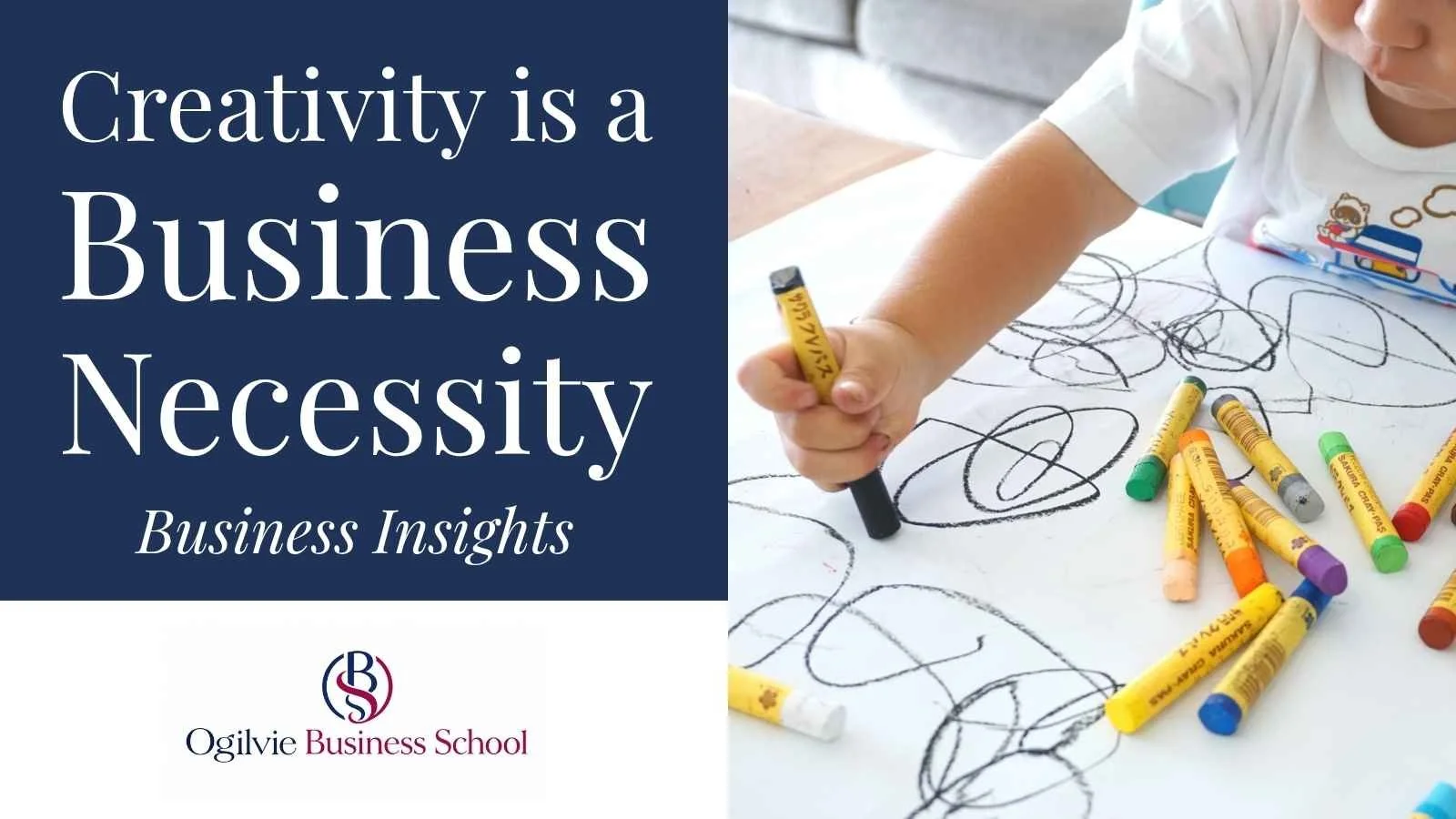
Young children are naturally drawn to draw, paint, make, build, sing, imagine and play. Then, as education takes over and intellectual focus becomes more serious, many of these activities move towards the edges.
The message, whether intended or not, is that there are the serious subjects. And there are the creative ones. There are sensible careers. And there are artistic ones. There is business. And there is art.
I think this division does us an enormous disservice.
Creativity is not something belonging exclusively to artists, musicians, writers and designers. It is a fundamental human capability. It allows us to imagine something that does not yet exist, make connections between apparently unrelated things, communicate complex ideas, solve problems, express emotion and change the environment around us.
That makes creativity important to art. And it also makes it important to science, engineering, entrepreneurship, leadership, technology, medicine and almost every successful business on the planet.
Perhaps it is time we stopped treating creativity as the opposite of commercial or intellectual seriousness.
Humans have created a false divide between creativity and commerciality.
A successful entrepreneur is profoundly creative. They look at what currently exists and imagine something different. They identify possibilities other people have not seen. They experiment. They create. They adjust.
A great engineer does the same. So does an architect. So does a scientist designing an experiment. So does a business leader trying to find a way through a problem for which there is no obvious answer. And so does an artist standing in front of a blank canvas.
The outputs are different. The underlying capacity to imagine, connect, experiment and create is not.
Creativity is not the decorative department of human intelligence. It is part of how we progress.
The right-brain versus left-brain story is attractive, but human beings are more interesting than that.
Popular culture divides people into “left-brained” and “right-brained” types. The left side is supposedly logical, analytical and mathematical. The right side is deemed artistic, intuitive and imaginative.
It is an appealing idea because it provides a simple explanation for why one person loves spreadsheets while another loves paint. However, the brain is considerably more sophisticated than that.
Different brain regions and networks certainly have specialised functions, but complex activities such as creativity, reasoning and problem-solving involve interaction across multiple systems. This matters because the old metaphor accidentally reinforces the very divide we should perhaps be questioning.
We do not need to choose between analysis and imagination. Some of the most capable people I have worked with throughout my career have been able to do both. They could analyse what was happening while also imagining what could happen next. They could understand the numbers and understand the people. They could operate within a system and question whether the system itself needed to change.
That combination is enormously powerful. And I believe we have to cultivate more of it.
What happens when creativity becomes peripheral to education?
There is growing international recognition that culture and arts education should not sit at the margins.
UNESCO's global Framework for Culture and Arts Education, adopted in 2024, calls for culture and the arts to be given greater prominence within education. Its work links arts education with capabilities including creativity, critical thinking, emotional intelligence, collaboration and wellbeing.
That should make us think. Because the value of arts education isn't simply that some children will eventually become professional artists. Most won't. That isn't the point.
We don't teach mathematics solely because children might become mathematicians. We don't teach physical education solely because they might become professional athletes. Education is also about developing the human being.
Creative activity asks something unusual of us. It asks us to observe. To experiment. To tolerate uncertainty. To make decisions when there isn't necessarily one correct answer. To notice. To respond. To create something from nothing.
It also teaches one of life's most useful lessons: sometimes something doesn't work, and that doesn't make the whole endeavour a failure. You change it. Paint over it. Rewrite it. Start again. Find another solution.
There is resilience in creativity.
Creativity also changes our relationship with attention.
There is another aspect of creative activity that helps humans enormously: presence. Anyone who has become completely absorbed in painting, drawing, playing music, making something, gardening, cooking, writing or another creative activity will probably recognise the experience.
For a period of time, the internal noise quietens. Attention moves towards what is immediately in front of you. Colour. Shape. Sound. Texture. Movement. The next mark. The next decision. There are obvious parallels here with ideas of mindfulness and focused attention.
Creativity is not a treatment for ADHD, and there is no credible basis for claiming that the marginalisation of creative subjects has caused increasing ADHD diagnoses. There is, however, an interesting and growing body of research around attention, mindfulness and creative or artistic engagement.
Research into mindfulness-based interventions for people with ADHD, for example, has identified potential benefits for attention and some aspects of functioning, although researchers continue to emphasise limitations in the evidence and the need for further high-quality research.
More broadly, the World Health Organisation has reviewed thousands of studies examining the relationship between arts engagement, health and wellbeing. The mechanisms identified across the research include sensory engagement, cognitive stimulation, emotional expression, social interaction and opportunities for emotional regulation.
That doesn't mean we should prescribe a paintbrush for every difficulty in modern life. It does suggest that dismissing creative activity as frivolous may be equally misguided. Perhaps making, imagining and creating fulfil needs that are more fundamental to human wellbeing than we have sometimes acknowledged.
Creativity matters far beyond the creative industries.
Now take the same thinking into business. Innovation is creativity with commercial consequences. Every new product began as an idea. Every brand began as an idea. Every company began as an idea. Every redesigned process, new service, advertising campaign, technological solution and new business model required somebody to imagine an alternative to what already existed.
Businesses frequently say they want innovation. Then they create environments in which people are terrified of getting anything wrong.
Those two things are incompatible.
Creativity requires enough psychological freedom to explore possibilities, including possibilities that ultimately don't work.
That doesn't mean abandoning commercial discipline. Quite the opposite. The most powerful combination is creativity followed by commercial judgement.
Imagine widely. Then test. Question. Cost. Analyse. Refine. Execute.
That is as relevant to a manufacturer developing a new product as it is to an artist developing a collection.
And art itself is a serious business.
There is another assumption I would particularly like to challenge. That creating art is meaningful, but trying to make money from it somehow makes it less pure.
Why?
We don't apply that logic consistently elsewhere. Design is commercialised. Fashion is commercialised. Music is commercialised. Architecture is commercialised. Film is commercialised. Publishing is commercialised. Interior design is commercialised. Photography is commercialised.
Some of the world's most valuable luxury businesses are built upon extraordinary combinations of design, craftsmanship, storytelling, aesthetic judgement, scarcity, identity and emotional connection.
These are deeply creative propositions.
Nobody looks at a successful luxury house and concludes that because it understands customers, pricing, positioning and margin, its creativity has somehow ceased to matter.
Commercial capability does not have to diminish creative integrity; it can actively protect it.
The starving artist should not be our romantic ideal.
There persists in society an uncomfortable romanticism around struggling artists. We celebrate passion. Authenticity. Sacrifice. The artist who creates because they simply must.
There is beauty in devotion to a craft. There is considerably less beauty in talented people being unable to pay their bills because nobody ever taught them how to price their work properly.
An artist is allowed to understand gross margin. An artist is allowed to negotiate. An artist is allowed to build multiple income streams. An artist is allowed to understand contracts. An artist is allowed to market themselves. An artist is allowed to build a valuable brand. An artist is allowed to employ people. An artist is allowed to create intellectual property. An artist is allowed to become wealthy.
None of those things makes them less creative. They make them commercially capable. And commercial capability creates choices.
The ability to turn creative work into sustainable income can buy something incredibly precious: the ability to continue creating.
The business opportunity around art is much bigger than selling paintings.
This is another area where I think creative people are sometimes encouraged to think too narrowly. An artist does not necessarily have one product. A body of creative work can sit at the centre of an ecosystem.
Original works.
Prints.
Commissions.
Licensing.
Illustration.
Products.
Books.
Workshops.
Teaching.
Collaborations.
Corporate projects.
Hospitality.
Interiors.
Public art.
Digital products.
Brand partnerships.
Experiences.
Intellectual property.
The right answer will be different for every artist, and indiscriminately adding revenue streams is not automatically good business. But understanding the possibilities changes the conversation.
The question stops being:
“Can I make a living selling paintings?”
and becomes:
“What is the strongest business I can build around my creativity?”
That is a much more interesting question.
Creativity and commerciality need each other.
Commerce without creativity eventually stagnates. Creativity without commercial capability can struggle to sustain itself. Neither needs to dominate the other. The opportunity lies in bringing them together.
Personally, I would love to see children grow up understanding that creativity is not something they have to abandon when they become serious adults.
I would love more business leaders to understand that creative thinking is not confined to the marketing or NPD department.
I would love more education systems to recognise making, imagining and experimentation as essential components of human development.
And I would particularly love artists to stop being made to feel that wanting to build successful businesses somehow cheapens their creative work.
It doesn't.
Art matters.
Creativity matters.
And the people who create deserve the opportunity to build sustainable, ambitious and commercially successful careers from what they do.
From Creative to Commercial
This belief is one of the reasons I created the new Professional Qualification in the Business of Art - Creative to Commercial Pathway at the Ogilvie Business School.
The programme is not designed to teach artists how to create.
They already bring the creativity.
It is designed to help them build the business around it.
Across an academic year, participants develop the practical commercial foundations behind their creative practice, from positioning, customers, branding, and websites to routes to market, sales, pricing, costing, cash flow, operations, and longer-term business planning.
Crucially, they don't simply study a theoretical business. They build their own with experienced support and guidance.
I don't believe creativity and commerciality belong in different worlds. I believe understanding both can create stronger artists, stronger businesses and ultimately a stronger creative economy.
The Professional Qualification in the Business of Art begins on 29 September 2026. Bookings are now open.
Find out more at the Ogilvie Business School.
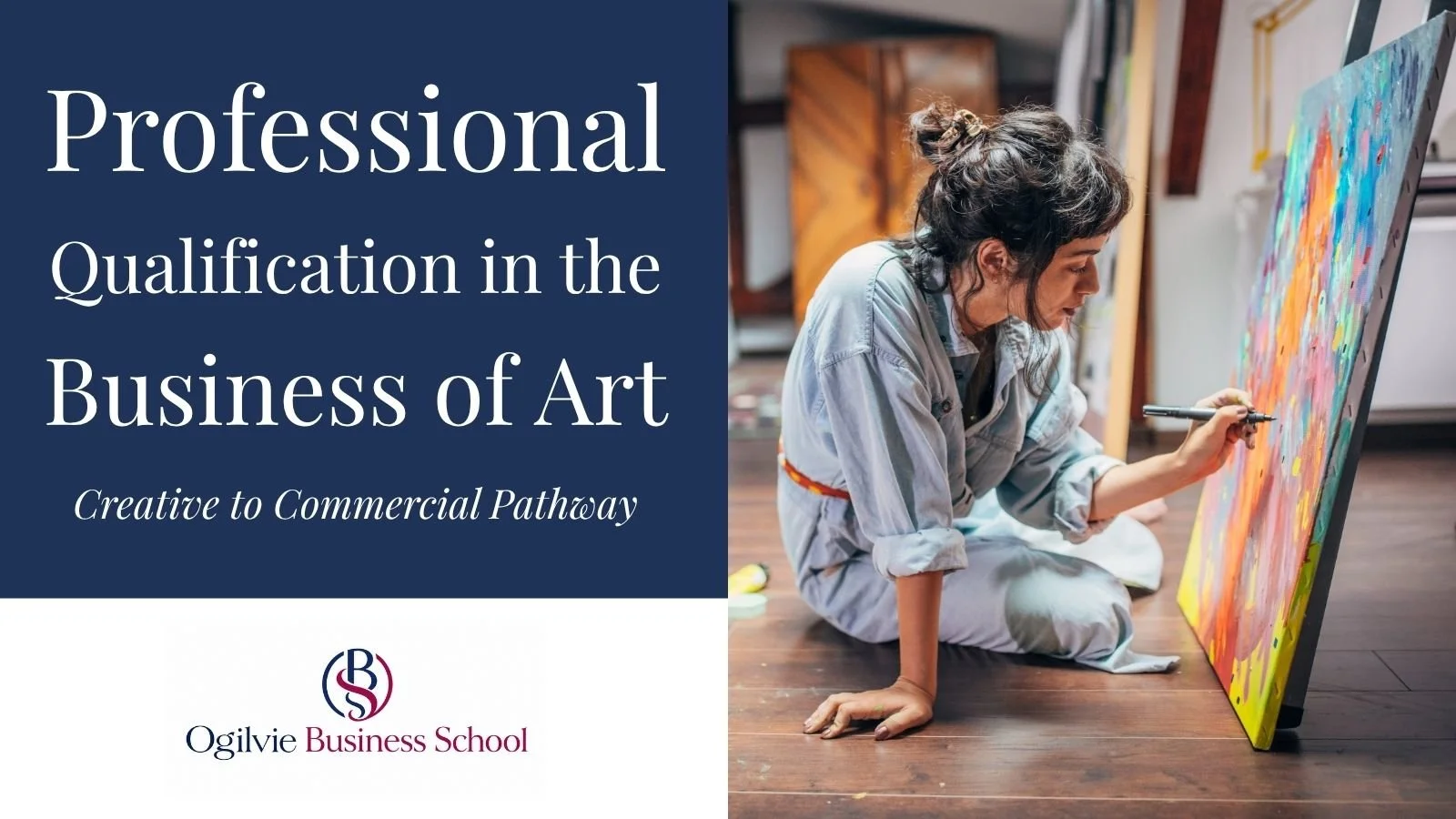
Professional Qualification in the Business Art
Creative to Commercial Pathway
A year-long qualification designed for people who want to build a business or career around art, creativity and the wider creative economy. Starts 29th September 2026. Bookings are open.